
PUWER Risk Assessments In Staffordshire
Work Equipment Risk Assessments
Most Staffordshire businesses come to us after something has happened. An inspector asked to see the assessment and nobody could find one. A machine arrived second-hand from an auction with no manual. Someone welded a frame onto a machine to make a job easier and it never got documented.
A PUWER risk assessment checks your work equipment against the Provision and Use of Work Equipment Regulations 1998, machine by machine, and tells you exactly where it falls short and what has to change.
We sell inspections and assessments only. No guarding, no interlocks, no parts, no maintenance contracts. Nothing we find on your site turns into a quote for us, which is the entire point of asking someone independent to look.


Get Your FREE PUWER Assessment Quote
Tell us what equipment you have and where the site is. We aim to come back with a quote within 48 hours.
PUWER Risk Assessments In Staffordshire
Work Equipment Risk Assessments
Most Staffordshire businesses come to us after something has happened. An inspector asked to see the assessment and nobody could find one. A machine arrived second-hand from an auction with no manual. Someone welded a frame onto a machine to make a job easier and it never got documented.
A PUWER risk assessment checks your work equipment against the Provision and Use of Work Equipment Regulations 1998, machine by machine, and tells you exactly where it falls short and what has to change.
We sell inspections and assessments only. No guarding, no interlocks, no parts, no maintenance contracts. Nothing we find on your site turns into a quote for us, which is the entire point of asking someone independent to look.


Assessment, Inspection Or Thorough Examination: Which Do You Need?
Three different things get called by each other’s names, and briefing the wrong one wastes a site visit.
A PUWER risk assessment is a conformity assessment. An assessor works each machine against the regulations and records every point where it does not meet them, with a written verdict against each criterion and the control measures needed to close it. It is triggered by an event rather than a date.
A PUWER inspection is the periodic in-service check under Regulation 6, looking for deterioration on equipment already established as suitable. The result is a record, not a certificate. That is covered on our periodic PUWER inspections page.
A thorough examination has a specific legal meaning. Under LOLER it applies to lifting equipment; within PUWER it applies to power presses working cold metal and nothing else, under Regulations 32 to 35.
And a CE or UKCA plate does not settle it. Modify a machine substantially and the original Declaration of Conformity can no longer be relied on. That single finding is the most common high-risk item we record, and it usually sits on a machine everyone assumed was fine because it came marked.
What Puts An Assessment On The Agenda
PUWER sets no calendar for assessments. Regulation 6 ties periodic inspection to risk rather than a fixed interval, and the only hard statutory cycle in the whole of PUWER belongs to power presses. So the useful question is never when it is due. It is what has changed.
- Modified equipment. A guard taken off for a changeover and never refitted, a welded frame or track added, two machines integrated into a line, a control retrofitted locally. The most common trigger and the biggest source of high-risk findings.
- Second-hand or auction machinery. No manual, no Declaration of Conformity, no history, and a data plate that no longer describes the machine in front of you.
- An enforcement visit. The HSE or your district council has asked to see the assessment, or an improvement notice has landed with a date on it.
- Relocation. Equipment moved between sites or repositioned, changing access, isolation and stability.
- An insurer or customer audit. A supplier assessment has asked for evidence you do not hold. Common across automotive and aerospace supply chains in the county.
- A near miss or an injury. Something went wrong and the immediate question is whether the machine was compliant.
- Acquisition or a new tenancy. You have inherited a plant list you did not specify and cannot vouch for.
- New equipment before first use. Regulation 6 requires inspection after installation where safety depends on installation conditions.
If none of these apply and the equipment has been assessed before, what you probably need is periodic inspection rather than a fresh assessment. We will tell you that rather than sell you the bigger job.

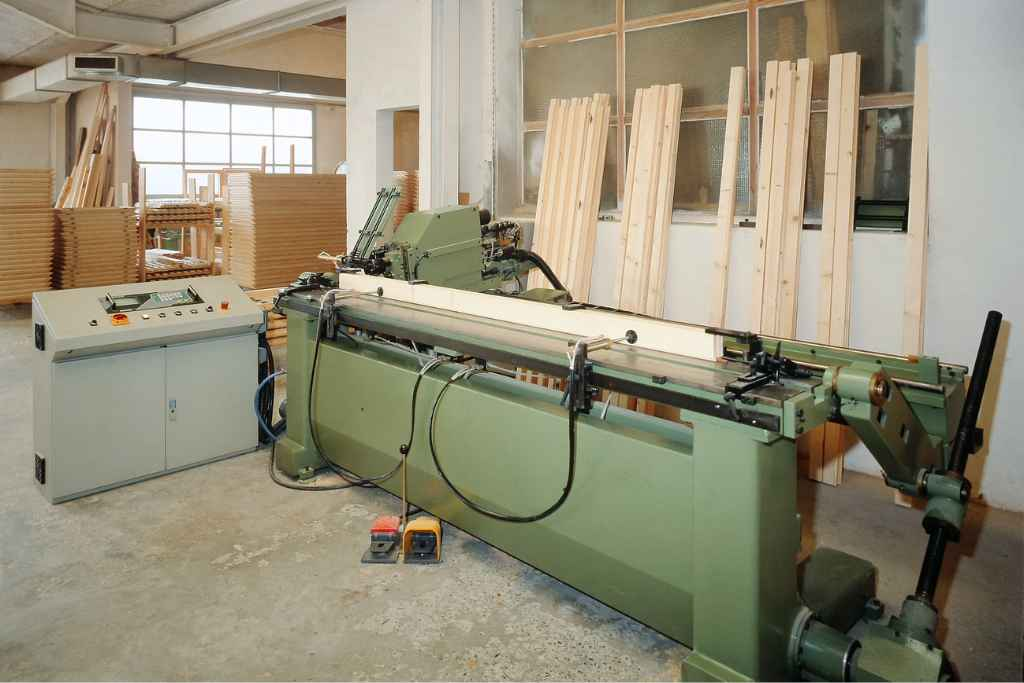

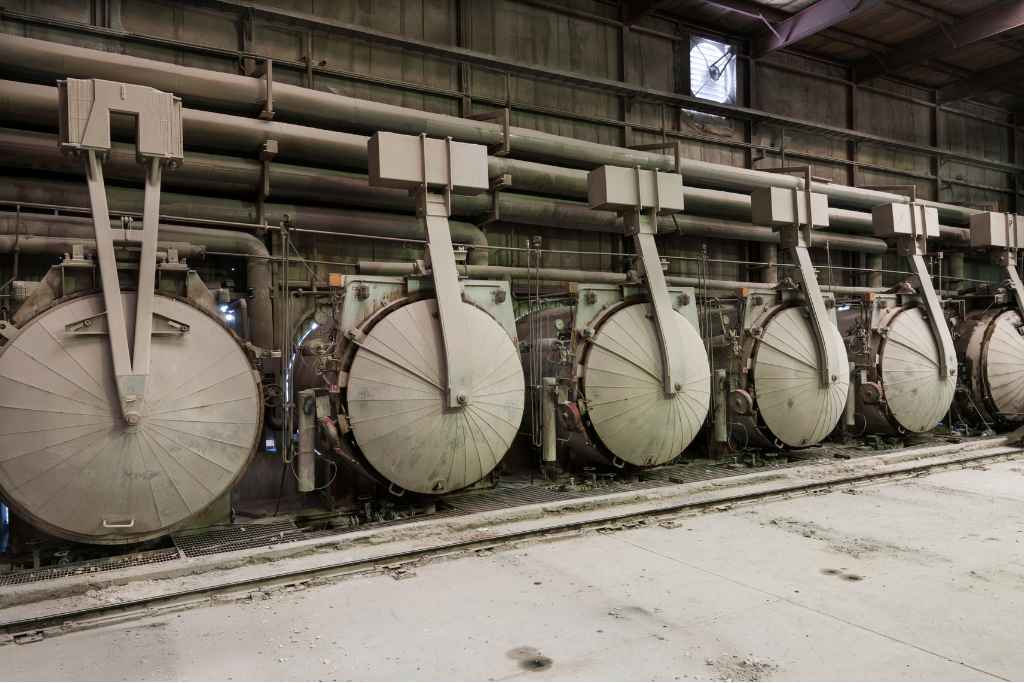

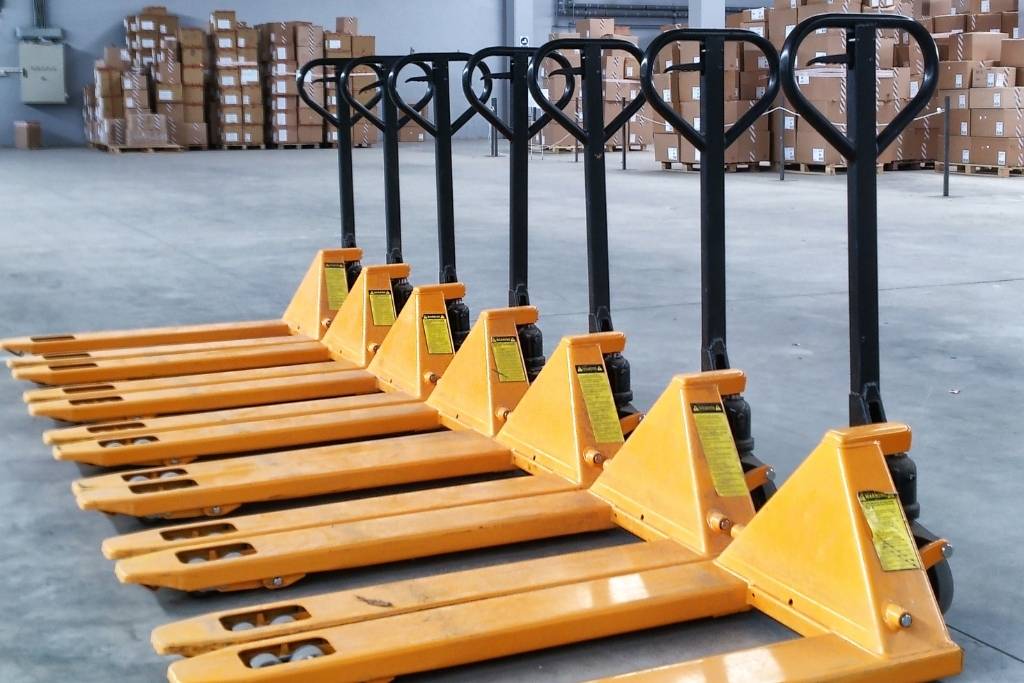

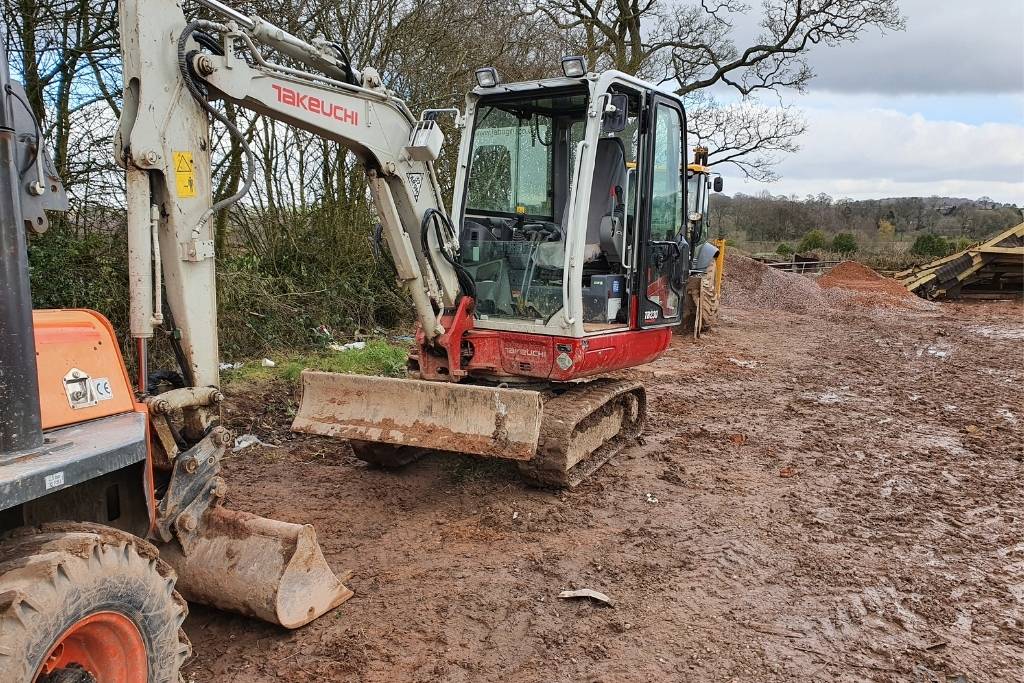
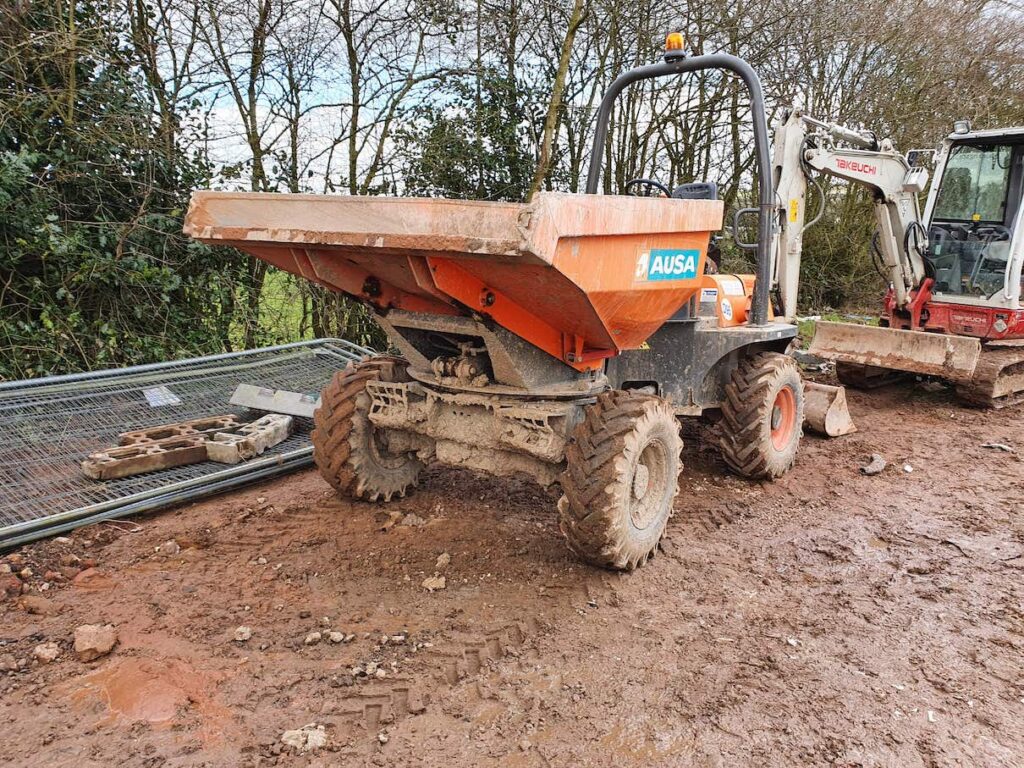
Work Equipment We Assess Across Staffordshire
Staffordshire’s industrial base is unusually broad, and the equipment list changes completely depending on which part of the county you are in.
Ceramics and materials. The Potteries still supports several thousand ceramics jobs, and the equipment that comes with it: kilns and industrial ovens, presses, glaze and slip plant, conveyors, dust extraction and the materials handling around all of it.
Advanced engineering and automotive. Staffordshire sits in the middle of the UK’s largest automotive cluster, with deep engine and advanced engineering expertise. Press shops, guillotines, folders, CNC machining centres, robot cells and welding equipment.
Aerospace and defence. Global manufacturers based in the county sit alongside a substantial MoD presence and a supply chain of contractors, with the precision machining and test equipment that goes with it.
Food and drink. Burton-upon-Trent remains the brewing capital of Britain, and food manufacturing across the county brings filling and packaging lines, palletisers, wrappers and CIP systems.
Logistics and distribution. The M6, A50 and A500 have made Staffordshire one of the busiest distribution corridors in the country, with millions of square feet of industrial and warehousing space in delivery. Dock levellers, balers, conveyors, racking and lift trucks.
Construction plant. A major manufacturer is headquartered in the county, and the plant, workshop and test equipment around that sector is a regular part of our work.
If your equipment is not on that list, it does not mean it falls outside PUWER. The definition is deliberately wide: any machinery, appliance, apparatus, tool or installation used at work, including equipment you hire rather than own.
GSB Inspection Services
Covering All Of Staffordshire, And Who Enforces Where
Staffordshire is currently ten councils, not one. Staffordshire County Council sits above eight district and borough councils: Cannock Chase, East Staffordshire, Lichfield, Newcastle-under-Lyme, South Staffordshire, Stafford, Staffordshire Moorlands and Tamworth. Stoke-on-Trent City Council is a unitary authority, inside the ceremonial county but running its own services independently of the county council.
That matters more than it sounds, because which body enforces PUWER at your site depends on your main activity, not your postcode. Under the Health and Safety (Enforcing Authority) Regulations 1998, the HSE is generally the enforcing authority for factories and manufacturing, while the local authority takes warehousing and wholesale distribution, retail, offices, hotels and catering, and leisure.
In a county with this much manufacturing sitting alongside this much distribution, that split runs straight through the middle of industrial estates. A ceramics factory and the third-party logistics warehouse on the next plot can answer to different enforcing authorities, with the same powers to serve improvement and prohibition notices. Plenty of businesses find out which one they have only when an inspector arrives.
And it is about to change. The government has confirmed that Staffordshire’s ten existing councils will be replaced by two new unitary authorities, expected to be established in April 2028 with shadow elections in May 2027. A northern authority will cover Newcastle-under-Lyme, Stoke-on-Trent and Staffordshire Moorlands; a southern authority will cover Stafford, East Staffordshire, Cannock Chase, Lichfield, Tamworth and South Staffordshire. For local-authority-enforced premises, that redraws who turns up. It changes nothing about the duty itself, and an assessment done properly now stands regardless of which council name is on the letterhead afterwards.
We cover the whole county and the city, and we are not a national call centre routing you to whoever is nearest.
What Happens When Our Assessor Is On Site
Most of the work is on the machines, but the visit starts before that and the paperwork side matters as much as the hardware.
1
Pre-assessment with your duty holder.
Done jointly with whoever holds health and safety responsibility, before anything is surveyed. We agree the scope and confirm exactly which items are in it, then review the systems around them: your policy and responsibilities, operational procedures and equipment manuals, training records, accident history relevant to the equipment, previous examination and inspection reports, and maintenance logs. Having those ready makes the day considerably shorter.
2
The physical survey.
Each machine is worked through against the criteria that apply to it, with the operator wherever possible, because how a machine is actually used is rarely how the manual says it is used. Expect questions about changeovers, cleaning and clearing blockages, since that is where most real risk lives. Machines need to be stopped and safely isolated for the guarding, interlock and isolation checks.
3
If the assessor finds something that means a machine should come out of use immediately, you hear it on the day, in person, not when the report lands. Findings are photographed as they are recorded so the person who has to fix it can see exactly what the assessor saw.
4
The report per machine.
One report for each item, so each can be actioned, filed and revisited on its own. Equipment details, the assessment matrix with a verdict against every criterion, a scored risk assessment, the control measures needed, the residual risk once they are in, a recommended inspection periodicity and the photographic annex.

Why Staffordshire Businesses Choose GSB
A PUWER assessment produces a list of things that are wrong with your machinery. It is worth thinking about who is holding the pen.
We have nothing to sell you off the back of it. Most firms offering assessments also sell guarding, interlocks, safety relays, light curtains, retrofits, training or maintenance contracts. Their assessment is the survey that precedes their quote. Not necessarily dishonest, but not independent either, and an inspector reading the report knows it. GSB sells inspections and assessments. That is the whole product.
Competence you can point to. We are an associate member of the Safety Assessment Federation and work to the competency standards and code of practice it sets. Our engineers are professionally registered with the Engineering Council or working towards registration. For a service whose entire value rests on the competence and independence of the assessor, external verification of both is worth having.
You speak to senior people. No brokers, no call centre, no being passed between departments. The business is run by its two directors, both senior engineers, and enquiries reach them. A technical question about whether something falls under PUWER, LOLER or PSSR gets answered on the call rather than in a follow-up.
We are local to the county. Our office is in Stoke-on-Trent, so Staffordshire sites are on our doorstep rather than at the end of a national routing list. That tends to show up in how quickly we can get to you when a date is running.
PUWER Risk Assessments In Staffordshire
- An assessment is not a walk round with a clipboard. Every machine is worked through against a fixed set of criteria, each tied to the regulation it comes from, and each gets a written verdict rather than a tick. The regulations divide into three groups for assessment purposes:
- Regulations 4 to 10, management issues – suitability, maintenance, inspection, specific risks, information and instructions, training, and conformity with product legislation.
- Regulations 11 to 24, physical aspects – dangerous parts and guarding, specified hazards, temperature, controls and control systems, stop and emergency stop, isolation of energy, stability, lighting, maintenance operations, markings and warnings.
- Regulations 25 to 30, mobile plant – applied where equipment is mobile, and recorded as not applicable where it is not, so the report shows the question was asked.
- Each criterion comes back as Satisfactory, Conditionally Satisfactory or Unsatisfactory, with a separate yes or no on whether action is required. Items that pass are recorded as passing, because an assessment that only lists problems is not evidence of anything.
Alongside that sits a scored risk assessment: likelihood against severity on a three by three matrix, with severity anchored to major injury as defined in RIDDOR. Scores of 7 to 9 are High and need urgent action, 4 to 6 Medium, 1 to 3 Low. Persons at risk are recorded separately for employees, visitors, contractors and the public, because the answer often differs between them.
Critically, every hazard also carries a residual risk rating showing where it lands once the recommended controls are in place. That is the column that turns a list of problems into a plan, and it is the one most reports in this market leave out.
Where equipment falls under another regime we say so rather than quietly duplicating it. Lifting parts attract a LOLER thorough examination, pressure systems need a written scheme of examination under PSSR, extraction needs LEV testing under COSHH, and access at height brings in the Work at Height Regulations. Where those already cover the significant risks they can satisfy the Regulation 6 duty for that item, so there is no sense paying twice.
Our Commitment To Your Safety
We Are A Proud Associate Member Of The Safety Assessment Federation (SAFed)
As an associate member of the Safety Assessment Federation (SAFed), GSB Inspections works to the competency standards and code of practice SAFed sets for inspection bodies. For a PUWER assessment that matters in a particular way: the value of the report rests entirely on the competence and independence of the person who wrote it, and SAFed membership is one of the few external checks on both.
How To Book A PUWER Assessment In Staffordshire
Six steps. Only one of them needs your production to pause, briefly, and only for the machines being assessed.
1
Send an equipment list
Email info@gsbinspections.co.uk or use the enquiry form on this page. A plant list or asset register is ideal; a spreadsheet of machine names and locations is enough to start. Photographs of anything home-built, heavily modified or bought second-hand help more than a description does. Tell us if an inspector or auditor has already set a date.
2
Receive a quote
We come back with a price, usually within 48 hours, based on the equipment and the site rather than on what we expect to find. If your list includes items already covered by another statutory examination you hold, we will say so and take them out rather than charge you to duplicate it.
3
Confirm a date
Machines have to be stopped and safely isolated for parts of the assessment, so we work around shutdowns, planned maintenance windows, out of hours and weekends. Being based in the county means Staffordshire dates are usually easier for us to move quickly on than they would be for a national provider.
4
Before the visit we work through the legislation, standards and industry guidance that apply to your process and equipment, and identify what good looks like for each item. Any risk assessments you have had done before are taken into account, including whether the recommendations from them were ever acted on.
5
The assessment and the report
The pre-assessment and physical survey happen on site, then you receive one report per machine: equipment details, the criteria matrix, the scored risk assessment, control measures, residual risk, recommended inspection periodicity and photographs of the findings.
6
What happens after
The report is a preliminary risk assessment for identifying the measures needed to comply. It is for you to consider internally and build your own final risk assessments from, which is how the duty sits under the Management of Health and Safety at Work Regulations 1999. Once the action plan is closed out we can reassess the remediated items so the record shows the loop was closed, and most sites then move onto periodic Regulation 6 inspections at the interval the report recommends.
GSB Inspections Reviews
Client Satisfaction
Great bloke, reliable, informative, pleasure to deal with.

 Gary Jackson
My first contact was with Gary and he dealt with my query and questions brilliantly. He explained the process, it was easy to sort and it went smoothly. Expected contact... read more was then with Dean who contacted us when we were told he would. Dean was the inspector of our scissor lift and again a prompt excellent service. Great communication from both, friendly service and would highly recommend! Sam
Mrs B
Well what a great service Gary provides, always does a very thorough job, can't recommend enough, we always Gary really great guy.
Daz Griffiths
Been using GSB for a year, great service keeping all our plant and machinery in certification
James Plant
Prompt and professional friendly service.
Apples & Pears Nursery
Great service. Would highly recommend and will use again.
Jade Furey
Gary has been doing MPi ltd's lifting certifications, air compressor tank and roller shutter door inspections for a number of years now. I have always found him a pleasure to... read more deal with, he is reliable, honest and very knowledgeable, we will continue to use him for as long as possible. Great service Gary keep up the good work and best of luck in 2022
matt page
Gary has been doing our certifications for the last few years. Very professional and very reliable. A**
Rob Scanlan
Inspected transferable winch units with, greatly appreciated, additional guidance covering separate requirements for accompanying D shackles and inspection schedule. Very diligent service and great value.
Andrew Piekarczyk
Excellent service & communications
Gary Jackson
Excellent service, very thorough and practical
Kerry Callear
Service, communication, support and advice has been excellent, Garry has gone out of his way to support our school with issues arisen from council maintenance, he has gone out of... read more his way to contact external companies that can support us with air testing. He has juggled appointments to be able to get into our school quickly and worked around teachers and students to conduct the testing on all our machines. We will continue to use your company in the future- Because we have had great support from Garry!
Miss H Morrey
Excellent service very competent knowledgeable and professional staff Would highly recommend
Carl Eades








Useful Staffordshire Resources
Website: staffordshire.gov.uk
The upper-tier authority for the county, covering education, transport and social care. Health and safety enforcement in local-authority-enforced premises sits with the district and borough councils rather than the county, so for a PUWER question you generally want your district. The county council is also the source of record for the local government reorganisation that will replace all ten Staffordshire councils with two unitary authorities from April 2028.
Commerce House, Festival Park, Stoke-on-Trent, ST1 5BE
Telephone: 01782 202222
Website: staffordshirechambers.co.uk
Representing businesses across the county with training, funded business support and sector forums. A useful first stop if you are new to operating in Staffordshire and working out which support and compliance obligations apply to you.
Website: hse.gov.uk/work-equipment-machinery/puwer.htm
The HSE hub for PUWER, covering the overview, inspection and maintenance of work equipment, training and competence, and mobile work equipment. The HSE is the enforcing authority for factories, manufacturing, construction, agriculture and hospitals. The Approved Code of Practice you will be assessed against is L22, Safe use of work equipment, and the regulations themselves are at legislation.gov.uk.
Your district or borough council
For warehousing and wholesale distribution, retail, offices, hotels and catering, and leisure premises, health and safety enforcement sits with your local district or borough council rather than the HSE. In Staffordshire that means Cannock Chase, East Staffordshire, Lichfield, Newcastle-under-Lyme, South Staffordshire, Stafford, Staffordshire Moorlands or Tamworth, or Stoke-on-Trent City Council if you are within the city. Their environmental health teams hold the same powers to serve improvement and prohibition notices as an HSE inspector. If you are not certain which applies to your site, it is worth establishing before you need to know.
Frequently asked questions
A conformity assessment of your work equipment against the Provision and Use of Work Equipment Regulations 1998. An assessor works through each machine, records every point where it does not meet the requirements, references the finding to the regulation it breaches, and grades it. The output is a report and an action plan, not a pass or a fail.
No, and it is the most common mix-up in this market. An assessment establishes whether a machine complies in the first place and is triggered by an event: a purchase, a modification, a relocation, an enforcement visit. An inspection is the periodic in-service check required by Regulation 6, looking for deterioration on equipment already established as suitable. Most sites need both, at different points.
PUWER sets no frequency for assessments. Regulation 6 ties periodic inspection to risk rather than a fixed interval, justified by the equipment, its use and its environment. In practice an assessment is repeated when something changes: the machine is modified, moved, used for a different job, or the existing assessment no longer reflects what is on the floor. Each report we issue recommends inspection periodicities for the items it covers.
A competent person. The Approved Code of Practice defines that as someone with sufficient knowledge and experience to know what to look at, what to look for, and what to do about what they find. There is no single mandatory qualification, which is a genuine source of confusion. What matters is demonstrable knowledge of the equipment, the hazards, the regulations and current safeguarding standards. The employer can delegate the work but never the accountability.
No. PUWER creates no certificate, no expiry date and no document to display. Anyone offering to issue you a PUWER certificate is selling something the regulations do not contain. What the regulations require is that inspection results are recorded and kept available, so the evidence takes the form of reports and records rather than a certificate.
No. A mark records that the manufacturer declared conformity with supply law for the use they intended. PUWER asks whether the machine is safe for the task you are actually doing, in your environment, with your people. New marked machinery fails assessments regularly, usually because it was installed differently to the manual, guarded for a different feed method, or integrated into a line the manufacturer never saw. Substantial modification can invalidate the original Declaration of Conformity entirely.
It depends on the main activity at the site, not the postcode. The HSE is generally the enforcing authority for factories, manufacturing, construction, agriculture and hospitals. Your district or borough council takes warehousing and wholesale distribution, retail, offices, hotels and catering, and leisure. In Staffordshire that is one of eight districts, or Stoke-on-Trent City Council within the city. Two units on the same industrial estate can have different enforcing authorities, and both hold the same powers to serve improvement and prohibition notices.
Not the duty, no. The government has confirmed Staffordshire’s ten existing councils will be replaced by two unitary authorities, expected in April 2028 with shadow elections in May 2027. For local-authority-enforced premises that changes which body inspects you and who you deal with, but PUWER itself is unchanged and an assessment carried out properly now remains valid evidence afterwards.
Almost anything used at work. The definition covers any machinery, appliance, apparatus, tool or installation for use at work, from a hand drill to a production line, including equipment hired rather than owned and equipment an employee brings from home. Use is defined just as widely, taking in starting, stopping, programming, setting, transporting, repairing, modifying, maintaining, servicing and cleaning.
Tell us when you enquire, including the date you have been given. It changes how we sequence the visit and what the report needs to demonstrate. Not having an assessment is a gap you can close; what makes it worse is closing it with a document that will not stand up when read. Send the equipment list to info@gsbinspections.co.uk and mention the notice.
Usually yes, but not for the same parts of the machine. LOLER covers the lifting parts; PUWER covers everything else about that equipment, plus everything that does no lifting at all. A vehicle lift is the classic case: the lifting mechanism under LOLER, the controls, guarding, isolation and stability under PUWER. Where an examination under LOLER, PSSR or another regime already covers the significant risks for an item, it can satisfy the Regulation 6 duty for that item.
Yes, for the parts involving guarding, isolation, controls and interlock function, and for anything needing safe access. It is usually a short period per machine rather than a day, and it can be spread across a shutdown, a maintenance window or out of hours. Tell us your constraints at quote stage and we will build the visit around them.
Yes, and it is one of the most common reasons for an assessment. The absence of a manual and a Declaration of Conformity is itself a finding, and it changes how the assessor has to approach the machine because intended use cannot be assumed. Photographs sent in advance help, particularly of guarding, controls and any modifications.
Regulation 5 is maintenance: keeping equipment in efficient working order and good repair. Regulation 6 is inspection: a planned, safety-critical check by a competent person, recorded separately. They are distinct duties and this is a recurring enforcement finding. A combined service log recording lubrication, oil changes and reactive repairs does not evidence Regulation 6, however well the machine is actually maintained.
Likelihood against severity on a three by three matrix. Severity runs from minor injuries through injuries causing time off work to major injury or death as defined in RIDDOR. That produces a score: 7 to 9 High and needing urgent action, 4 to 6 Medium, 1 to 3 Low. Persons at risk are recorded separately for employees, visitors, contractors and the public. Every hazard also carries a residual rating showing where it lands once the recommended controls are in.
No, and it is worth being straight about that. What we carry out is a preliminary risk assessment for the purpose of identifying the measures needed to comply with PUWER. The content is for you to consider internally and use to form your own final risk assessments, which is how the duty sits under the Management of Health and Safety at Work Regulations 1999. It gives you the technical evidence base and the action plan; the risk assessment itself remains the employer’s.
No. GSB sells inspections and assessments only, not equipment, guarding, safety systems, parts or maintenance contracts. Reports describe the compliant outcome required rather than naming a product or a supplier. It is worth asking any provider this directly, because a firm that also sells remediation has a commercial interest in the length of your action plan.
GSB Inspection Services
PUWER Assessment Service Areas In Staffordshire
This is not an exhaustive list. We carry out PUWER risk assessments across the whole county and the city, and we are constantly expanding our reach. If your site sits outside these areas, send us your equipment list and we will tell you plainly whether we can cover it.
- Stoke-on-Trent
- Newcastle-under-Lyme
- Stafford
- Cannock
- Lichfield
- Tamworth
- Burton upon Trent
- Uttoxeter
- Leek
- Stone
- Rugeley
- Burntwood
- Biddulph
- Kidsgrove
Require A PUWER Risk Assessment In Staffordshire?
No brokers, no call centre, and nothing to sell you off the back of what we find.
Send your equipment list and site location using the form below, or email info@gsbinspections.co.uk. We aim to come back with a quote within 48 hours. If an inspector or auditor has already set you a date, say so in the message.
info@gsbinspections.co.uk
Quick Reply
Have any questions?
01782 855481
Usual working hours
Mon-Fri, 8am until 4pm