
LOLER Inspections Cannock
Lifting Equipment Inspections
If your LOLER certificate has run out, or the renewal date is close enough to be a problem, what you need is a competent person on site and a report in your hands. Send your equipment list and site postcode to info@gsbinspections.co.uk and we aim to come back with a quote within 48 hours. If yours has already lapsed, say so, because overdue work is scheduled ahead of routine renewals.


Get Your FREE LOLER Inspection Quote
Send us your equipment list and site postcode and one of the team will come back to you with a price.
LOLER Inspections Cannock
Lifting Equipment Inspections
If your LOLER certificate has run out, or is close to it, send your equipment list and site postcode to info@gsbinspections.co.uk. We aim to come back with a quote within 48 hours, and overdue work is scheduled ahead of routine renewals.


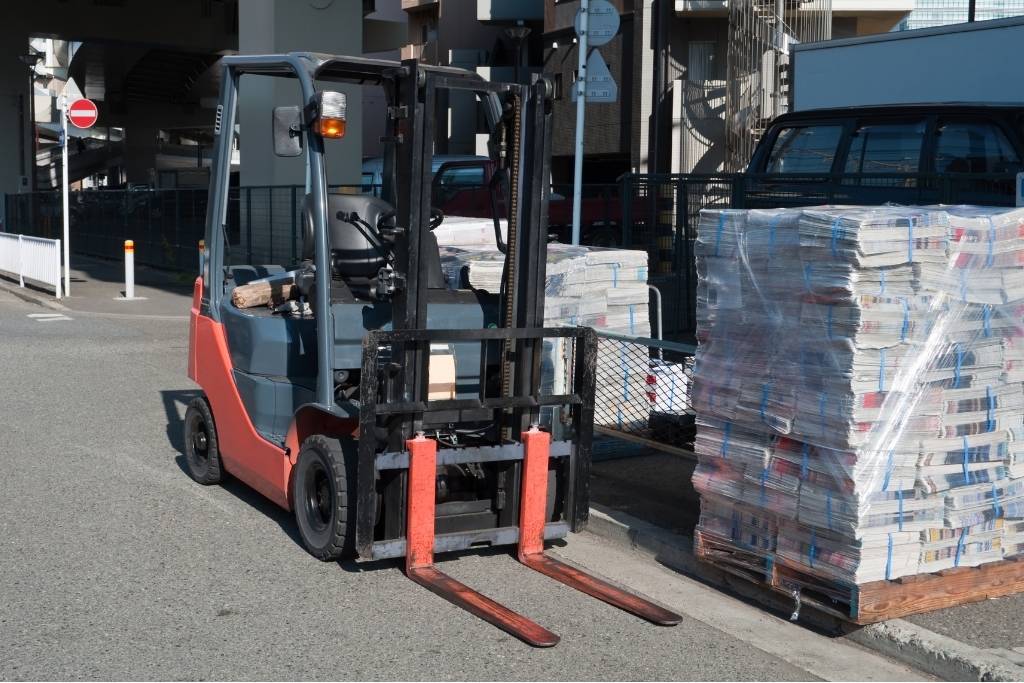
If your LOLER certificate has lapsed, here is where you stand
There is no grace period in the Lifting Operations and Lifting Equipment Regulations 1998. The day after a thorough examination falls due, the equipment is being used outside the interval set under Regulation 9, and it is the duty holder who carries that, not the inspection company that stopped visiting.
What that means in practice is narrower than most people fear. You are not obliged to scrap anything or shut a site down. You are obliged to stop using the affected equipment for lifting until a competent person has examined it and issued a report. Equipment that is isolated, tagged and genuinely out of use is not accruing a breach while you arrange the visit.
Enquiries reaching us from Cannock tend to follow a few patterns:
- the certificate expired some time ago and nobody noticed until an audit, an insurer renewal questionnaire or a customer compliance pack asked for it
- the renewal is four to six weeks out and the incumbent provider has gone quiet, been absorbed into a larger group, or come back with a price that prompted a review
- equipment has been bought, hired or relocated and nobody is certain whether an examination was needed before it went into service
- something has been found in-house and the site wants an independent opinion before deciding whether to keep running it
If you are in the first of those, mention it when you get in touch.
The six-month items most Cannock sites get wrong
Cannock work is concentrated in distribution and light manufacturing, and that produces one very common compliance gap: everything ends up on a single annual cycle.
Regulation 9 sets two default intervals. Lifting equipment used to lift people, and all lifting accessories, must be thoroughly examined at least every six months. Other lifting equipment, meaning the counterbalance truck, the reach truck, the goods lift, the jib crane, is at least every twelve. A written examination scheme drawn up by a competent person can set different periods, but without one, those are the defaults.
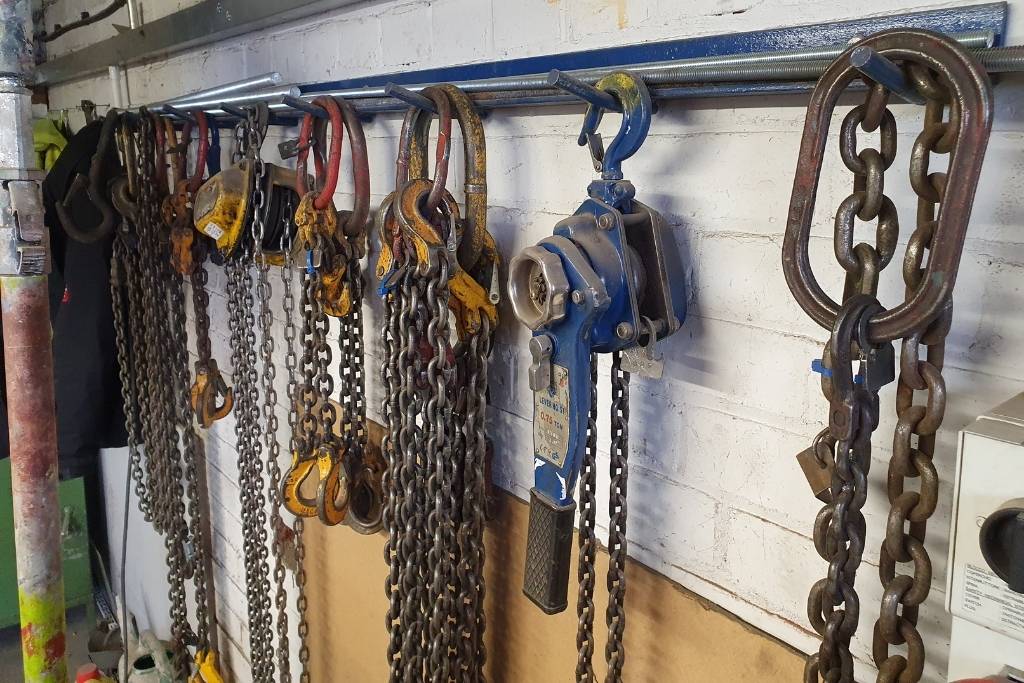
The word doing the work there is accessories. A sling is an accessory. So is a chain, a shackle, an eyebolt, a lifting beam, a magnet, a vacuum lifter and a fork-mounted jib. On plenty of sites these live in a rack by the loading bay, get used weekly, and get examined once a year alongside the trucks because that is when the inspection company happens to visit. The HSE identifies this as one of the most common gaps it finds, and it is among the cheapest to put right, because accessories examine quickly once they are gathered in one place.
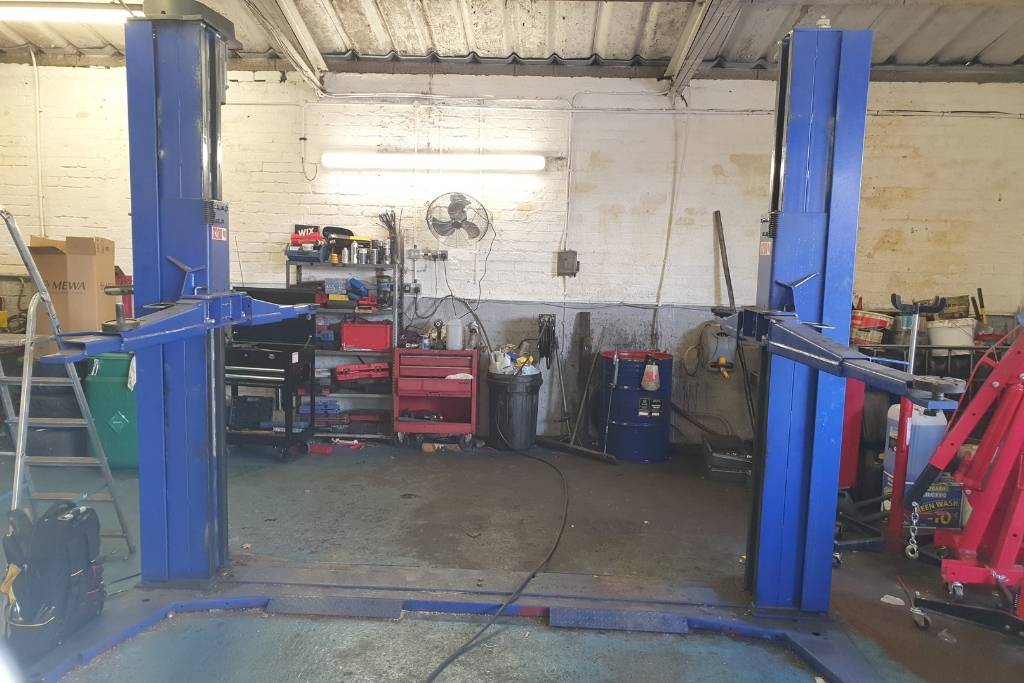
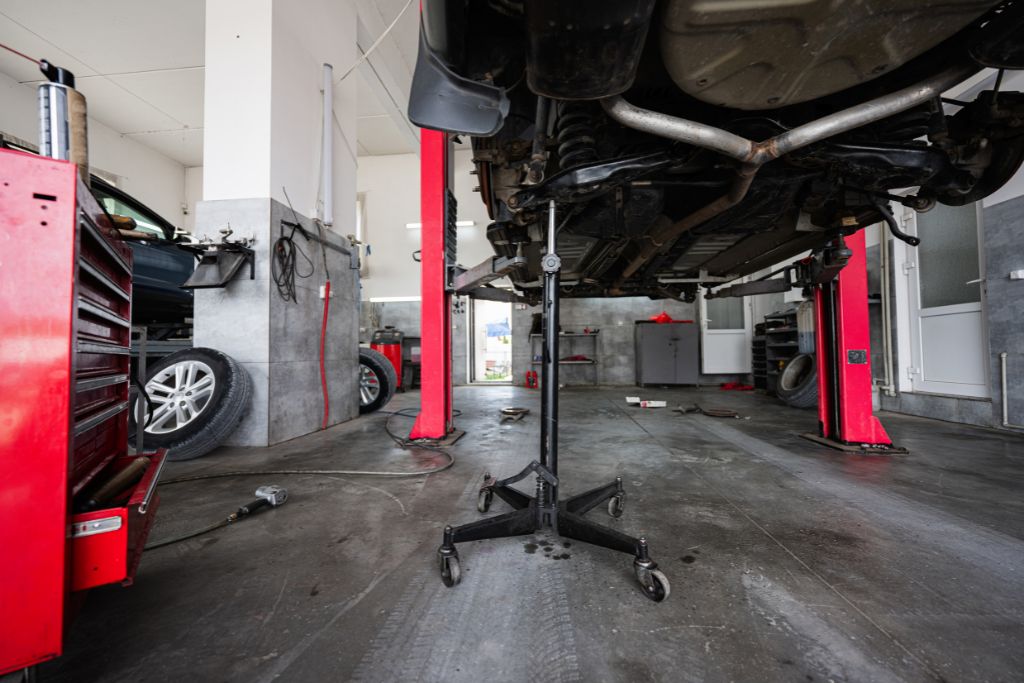
Vehicle lifts. If you run a workshop, the position is more nuanced than the twelve-month default suggests. A two-post or four-post lift raising a vehicle is lifting a load rather than a person, so the LOLER default is twelve months. The HSE revised its motor vehicle repair guidance specifically to direct duty holders to risk-assess the exposure of technicians working beneath a raised vehicle when setting that interval. Six months is what competent persons commonly recommend and what the trade generally works to. If yours is on twelve, that ought to be a documented decision rather than an assumption.
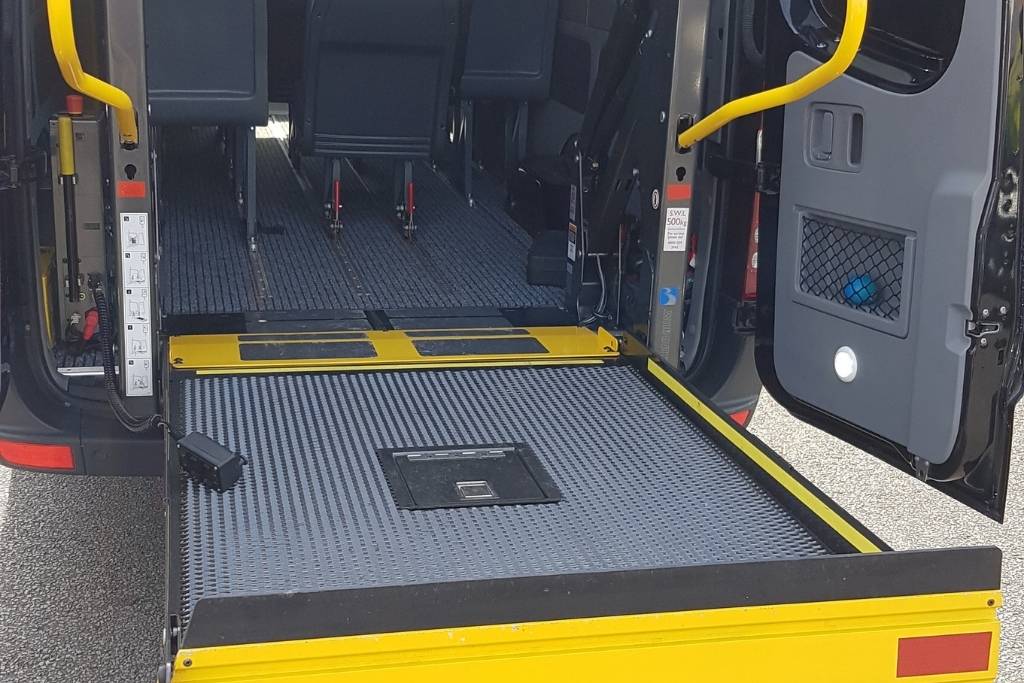
Anything that lifts a person. Scissor lifts, boom lifts, vehicle-mounted platforms and any hoist carrying a person are six-monthly.
An examination is also required after installation, and after any exceptional circumstance likely to affect safety: a collision with racking, an overload, a significant repair, or a machine moved between sites.
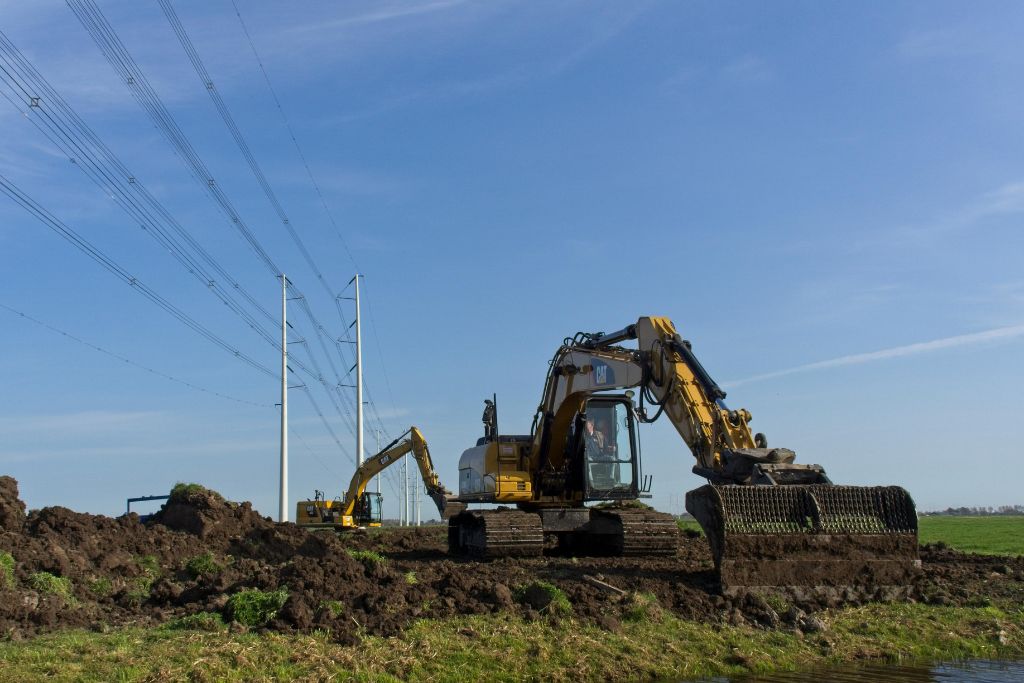
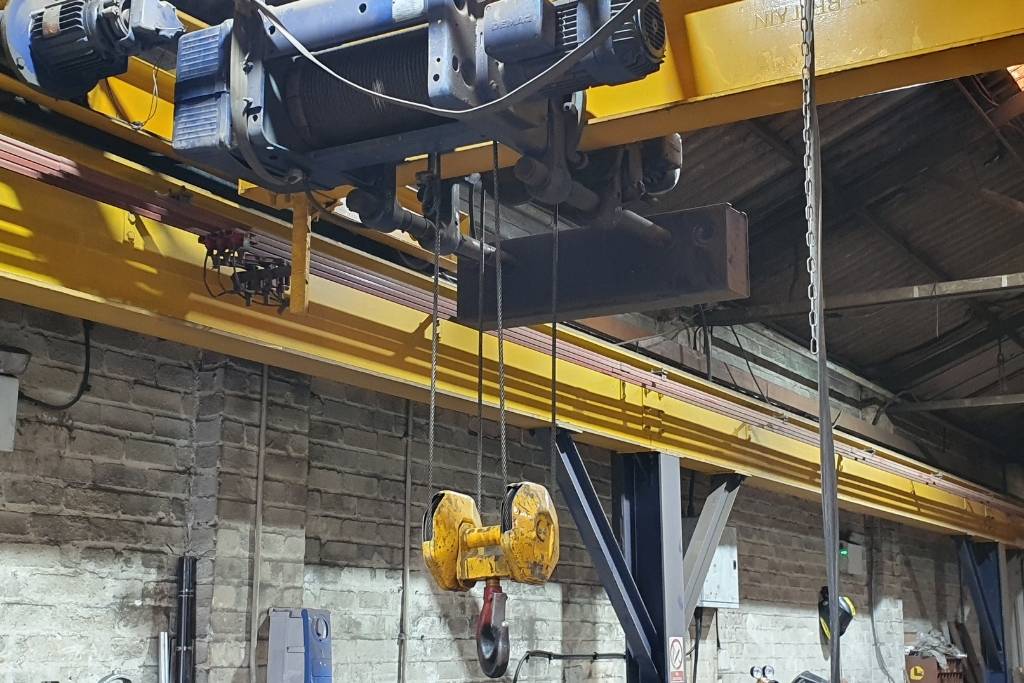
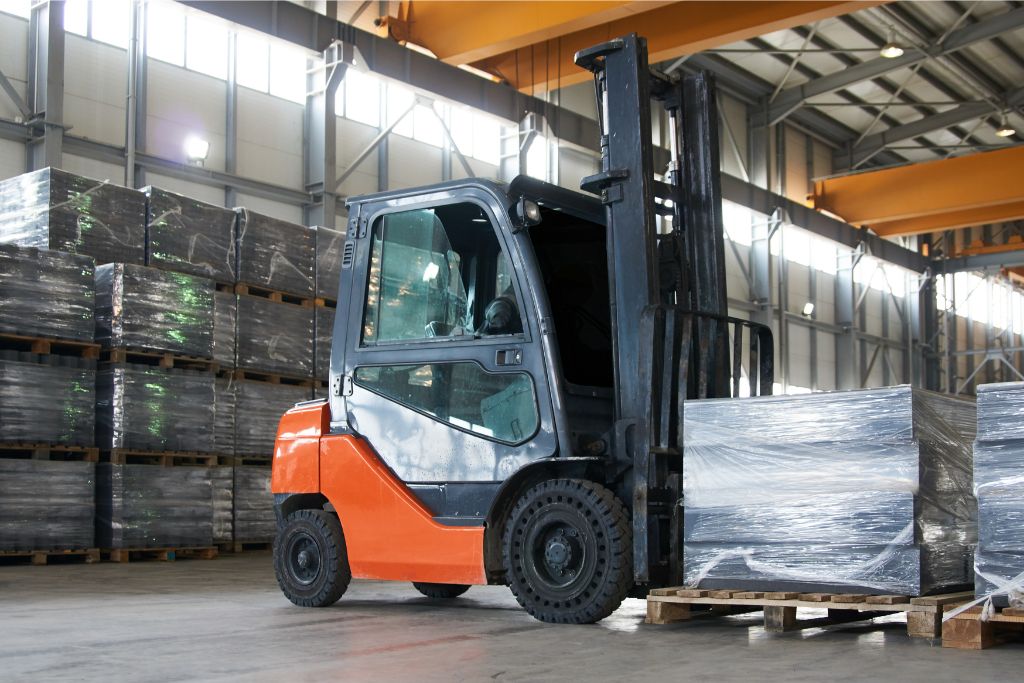
Who regulates your Cannock site, and why it may not be the HSE
This one catches people out, and it matters more here than in most towns.
Health and safety enforcement in Great Britain is split between the HSE and local authorities under the Health and Safety (Enforcing Authority) Regulations 1998. Which body has your site depends on the main activity carried on at the premises. It does not depend on the equipment, and it does not depend on the size of the business.
Local authorities, which here means Cannock Chase District Council, are the enforcing authority for warehousing, wholesale distribution, retail, offices, hotel and catering, residential care homes, and the consumer and leisure sectors. The HSE takes industrial and manufacturing premises, motor vehicle repair, construction and agriculture.
Cannock leans heavily towards the first of those lists. The distribution sheds along the A5 and around junction 11 of the M6, the units at Kingswood Lakeside and Lakeside Business Park, the trade counters and builders merchants, the care homes: for a large share of these the regulator is the council on Beecroft Road rather than the HSE.
That is not trivia. Under Regulation 10 of LOLER, where a competent person finds a defect involving an existing or imminent risk of serious personal injury, they must send a copy of the report to the relevant enforcing authority as well as to you. If your premises are council-enforced, that report goes to Cannock Chase District Council. Knowing in advance which body would receive it, and having your own copy of it, is the difference between managing a defect and being caught out by one.
Sites with genuinely mixed activity sit in a grey area, and in those cases the HSE and the local authority agree the allocation between themselves. If you are not certain which applies to you, it is a fair question to put to us when you enquire.
What happens on the day
A thorough examination is a shorter and less disruptive visit than most people expect. This is the shape of it.
1
On site.
The engineer works through each item against Regulation 9, examining the parts liable to cause danger. Most items are examined where they stand. Trucks and accessories rarely need to be out of service for more than a few minutes each, though a goods lift or an overhead crane takes longer. If a particular line or bay cannot stop, tell us at booking and we will sequence around it.
2
Defects.
Anything found is categorised by severity. A defect presenting an existing or imminent risk of serious injury means the item comes out of use straight away, and a copy of the report goes to your enforcing authority as well as to you. Timescaled defects carry a stated deadline for repair, and observations are recorded for monitoring. Everything is set out in the Report of Thorough Examination.
3
Each item gets a Report of Thorough Examination carrying the information required under Schedule 1: what was examined, when and by whom, any defects found, and the date the next examination falls due. The interval runs from the date of examination rather than the date the report arrives, which is worth checking carefully on any certificate you inherit from a previous provider.
4
Records.
Reports arrive electronically in a form you can drop straight into an audit pack or forward to an insurer. Reports on lifting accessories should be kept for two years; reports on other lifting equipment until the next one is issued.
Scheduling around here is straightforward. Cannock sits on the M6 and A5 corridor, and operators running several sites along that route are usually better served by sequencing the visits into one run than by booking each site separately.
Our Commitment To Your Safety
We Are A Proud Associate Member Of The Safety Assessment Federation (SAFed)
As an associate member of the Safety Assessment Federation (SAFed), GSB Inspections works to the competency standards and code of practice that SAFed sets for the engineering inspection industry. Membership is listed publicly on the SAFed register, so you can verify it before you appoint anyone. It matters most to buyers who have to satisfy an insurer or an auditor that their inspection provider is credentialled rather than merely available.
LOLER inspections in Cannock
We examine lifting equipment across the spread of Cannock working sites: distribution and third-party logistics, light and heavy manufacturing, engineering and fabrication, motor vehicle repair and commercial fleet workshops, construction and plant hire, builders and timber merchants, food production and cold storage, waste and recycling, and residential and nursing care.
In practice a Cannock equipment list usually contains some combination of counterbalance, reach and very-narrow-aisle forklift trucks; pedestrian and ride-on pallet trucks with powered lift; dock levellers and scissor lift tables; goods, passenger and mezzanine platform lifts; overhead travelling, jib and gantry cranes; runway beams and monorails; vehicle workshop lifts, engine cranes and transmission jacks; MEWPs and scissor lifts; tail lifts and lorry-mounted cranes; tipping and skip-handling gear; patient hoists and ceiling track hoists in care settings; and the accessories, meaning slings, chains, shackles, eyebolts, beams, magnets and vacuum lifters.
A thorough examination under Regulation 9 is not a service and it is not a maintenance visit. It is a systematic examination by a competent person of those parts of the equipment liable to cause danger, ending in a written report that either confirms the equipment is safe to remain in use or sets out what must be put right and by when. Lifting equipment means any work equipment used for lifting or lowering a load, including the attachments used to anchor, fix or support it.
Why your service engineer cannot sign your thorough examination
When an inspection is bundled into a maintenance contract, one organisation ends up maintaining the equipment and then certifying its own work. HSE guidance is direct about this: the competent person should not be the person who carries out routine maintenance on that equipment, because they would be assessing their own work, and should be sufficiently independent and impartial to make an objective decision.
GSB sells inspections. Not equipment, not maintenance contracts, not parts, not repairs. There is nothing on the report we could be selling you off the back of, which is the entire point of the requirement.
The practical side matters as well. Your enquiry reaches the two directors who own the business, both of them senior engineers, rather than a call centre, a broker, or a queue between departments. Technical questions get answered on the call and scheduling gets agreed on the call.
If you are moving across from another provider, say so. Incomplete records are normal in a handover, and we can work from a physical walk-round of the assets on the first visit rather than waiting for a previous supplier to release paperwork.
Send your equipment list and site postcode to info@gsbinspections.co.uk, or use the form on this page. If you would rather talk it through first, 01782 855481 reaches the same people, though we will still ask for the list in writing afterwards so there is one written chain running from the enquiry through to the report.
Useful Cannock compliance resources
Civic Centre, Beecroft Road, Cannock, Staffordshire WS11 1BG
Telephone: 01543 462621
Email: environmentalhealth@cannockchasedc.gov.uk
The enforcing authority for health and safety at warehousing, distribution, retail, office, care and hospitality premises across the district, and the body that would receive a report on a dangerous defect at those sites.
Part of the Greater Birmingham Chambers of Commerce network, representing businesses across Cannock, Hednesford and Rugeley, and a useful route into local compliance and operations peer groups.
The authoritative source for thorough examination intervals, what competence means under the Approved Code of Practice L113, and the reporting duties that sit under Regulation 10.
GSB Inspections Reviews
Client Satisfaction
Gary has been doing MPi ltd's lifting certifications, air compressor tank and roller shutter door inspections for a number of years now. I have always found him a pleasure to... read more deal with, he is reliable, honest and very knowledgeable, we will continue to use him for as long as possible. Great service Gary keep up the good work and best of luck in 2022

 matt page
Been using GSB for a year, great service keeping all our plant and machinery in certification
James Plant
Great service. Would highly recommend and will use again.
Jade Furey
Gary has been doing our certifications for the last few years. Very professional and very reliable. A**
Rob Scanlan
Well what a great service Gary provides, always does a very thorough job, can't recommend enough, we always Gary really great guy.
Daz Griffiths
Prompt and professional friendly service.
Apples & Pears Nursery
My first contact was with Gary and he dealt with my query and questions brilliantly. He explained the process, it was easy to sort and it went smoothly. Expected contact... read more was then with Dean who contacted us when we were told he would. Dean was the inspector of our scissor lift and again a prompt excellent service. Great communication from both, friendly service and would highly recommend! Sam
Mrs B
Excellent service very competent knowledgeable and professional staff Would highly recommend
Carl Eades
Service, communication, support and advice has been excellent, Garry has gone out of his way to support our school with issues arisen from council maintenance, he has gone out of... read more his way to contact external companies that can support us with air testing. He has juggled appointments to be able to get into our school quickly and worked around teachers and students to conduct the testing on all our machines. We will continue to use your company in the future- Because we have had great support from Garry!
Miss H Morrey
Excellent service & communications
Gary Jackson
Great bloke, reliable, informative, pleasure to deal with.
Gary Jackson
Excellent service, very thorough and practical
Kerry Callear
Inspected transferable winch units with, greatly appreciated, additional guidance covering separate requirements for accompanying D shackles and inspection schedule. Very diligent service and great value.
Andrew Piekarczyk





Got Questions? (FAQs)
LOLER stands for the Lifting Operations and Lifting Equipment Regulations 1998. It governs the safe use of lifting equipment at work in Great Britain, covering how lifting operations are planned and supervised, how equipment is positioned and marked, and how often it must be thoroughly examined by a competent person.
It is a systematic examination by a competent person of the parts of a piece of lifting equipment liable to cause danger, carried out at set intervals and resulting in a written report. It is the formal, statutory term for what most people call a LOLER inspection or a LOLER test. It is not a service, and it is not a maintenance visit.
Regulation 9 sets two defaults: at least every six months for equipment used to lift people and for all lifting accessories, and at least every twelve months for other lifting equipment. Alternatively, examinations can follow a written examination scheme drawn up by a competent person. An examination is also required after installation and after any exceptional circumstances liable to affect safety.
Yes, and this is one of the most common compliance gaps the HSE finds. Slings, chains, shackles, eyebolts, lifting beams, magnets and vacuum lifters are all accessories and all fall on the six-month interval, even though the truck they are used with is on twelve months. Putting the whole site on a single annual visit leaves the accessories out of compliance for half of every year.
Broadly, the employer or the person in control of the equipment at work. The duty cannot be contracted out. You can appoint an inspection company to carry out the examinations, but the legal responsibility for making sure they happen, and for acting on what they find, stays with you.
Someone with sufficient practical and theoretical knowledge and experience of the equipment to detect defects and judge how serious they are. The Approved Code of Practice L113 sets out what that means in practice, and adds that the competent person should be sufficiently independent and impartial to make an objective decision.
HSE guidance advises against it. The competent person should not be the person who carries out routine maintenance on that equipment, because they would then be assessing their own work. The same concern applies where the examination is bundled into a maintenance contract with the firm that services the equipment.
In everyday use the two terms are used interchangeably, and searching for either will bring you to the same service. Strictly, LOLER distinguishes between the thorough examination, which is the detailed statutory assessment producing a Schedule 1 report, and an inspection, which is a lighter interim check where the risk of deterioration warrants one between examinations. Some equipment needs both.
The information listed in Schedule 1: identification of the equipment and its owner, the date of the last examination, the safe working load, the reason for the examination, any defect that is or could become a danger, any repair or alteration required and by when, the date of the next examination, and details of the competent person and who they carried out the examination for.
If the defect involves an existing or imminent risk of serious personal injury, the equipment must come out of use immediately, and under Regulation 10 the competent person must send a copy of the report to the relevant enforcing authority as well as to you. Less serious defects carry a stated timescale for repair. Observations are recorded for monitoring.
Not always. Where equipment is new, has a Declaration of Conformity less than twelve months old, and does not depend on how it is installed, a separate first-use examination is generally not needed. Where safety depends on the installation conditions, such as a platform lift or an overhead crane fitted on site, it must be examined after installation and before it goes into service.
Breaches of LOLER are criminal offences under the Health and Safety at Work etc. Act 1974, and can be prosecuted by the relevant enforcing authority. Separately, and often more immediately, insurers routinely treat cover as compromised where a thorough examination is overdue or a dangerous defect has been left unaddressed. If yours has lapsed, the practical answer is to take the equipment out of use and book an examination rather than to keep running it.
Yes. We cover the whole of the Cannock Chase district and the surrounding area, including Hednesford, Rugeley, Norton Canes, Heath Hayes, Bridgtown, Great Wyrley and the industrial estates along the A5 and around junction 11 of the M6. We work UK-wide, so being outside the immediate area is not a problem either.
Take the affected equipment out of use for lifting, isolate and tag it, then send your equipment list and site postcode to info@gsbinspections.co.uk. Mention that you are overdue, because overdue work is scheduled ahead of routine renewals. Equipment that is genuinely out of use while you arrange the examination is not accruing a further breach.
It depends on the main activity at your premises. Warehousing, distribution, retail, offices, care homes and hospitality are enforced by Cannock Chase District Council. Manufacturing, motor vehicle repair, construction and agriculture are enforced by the HSE. Given how much of Cannock is distribution and warehousing, the council is the enforcing authority for a large share of local sites. If your activity is mixed, ask us and we will talk it through.
Ideally the most recent Report of Thorough Examination for each item, so the next due dates carry across correctly. In practice records are often incomplete at handover, and that does not need to hold anything up. We can build the asset list from a physical walk-round on the first visit, which is how most switching jobs start.
Yes, and it is usually the better way to do it. If you operate more than one site, list them all at the enquiry stage and we will come back with a sequenced programme and a single point of contact for the schedule rather than separate uncoordinated bookings.
Send your equipment list and site postcode to info@gsbinspections.co.uk or complete the form on this page, and we aim to come back with a quote within 48 hours. If you would rather discuss it first, 01782 855481 reaches one of the two directors, who are both senior engineers and can answer technical questions on the call. We will still ask for the list in writing so there is one record running from enquiry to report.
Yes. Reports carry the full Schedule 1 information and are issued electronically in a form you can drop straight into an audit pack or forward to an insurer. Buyers switching under audit pressure often ask for the outstanding items first so they have something to show immediately, and that is usually straightforward to arrange.
Yes. GSB Inspections Ltd is an Associate Member of SAFed and works to the competency standards and code of practice it sets for the engineering inspection industry. The membership is listed publicly on the SAFed website, so it can be verified independently.
Require A LOLER Inspection in Cannock?
No brokers, no call centre, no being passed between departments.
Send your equipment list and site postcode using the form below and we aim to come back with a quote within 48 hours. If your certificate is already overdue, mention it and we will be straight with you about the earliest date we can offer.
info@gsbinspections.co.uk
Quick Reply
Have any questions?
01782 855481
Usual working hours
Mon-Fri, 8am until 4pm